Food & drink
Traditional Dutch Food to Try in Amsterdam
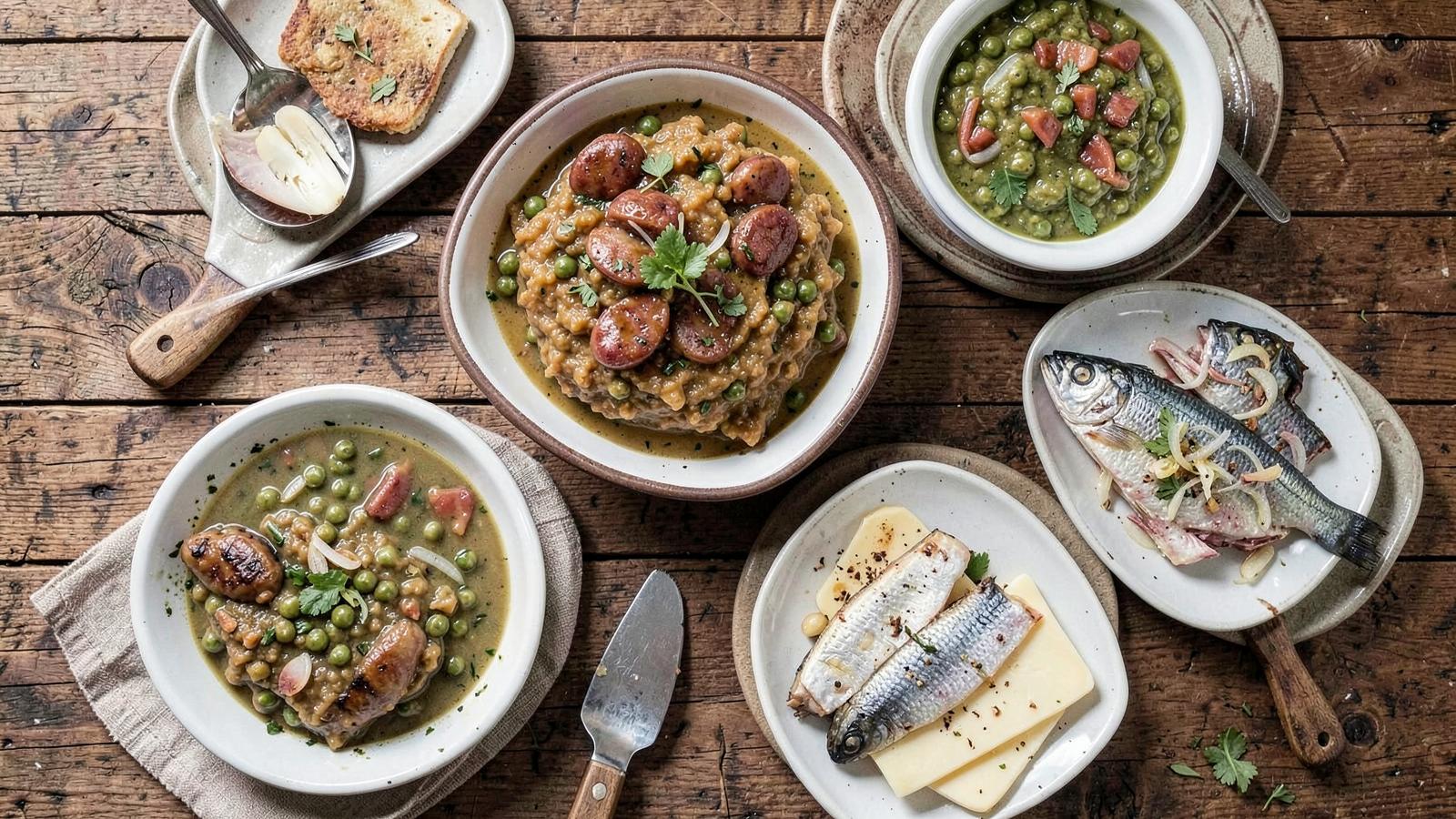
Amsterdam's food identity is harder to pin down than most capitals'. What ends up on the table is a mix of hearty winter cooking from the Dutch countryside and dishes brought over from Indonesia and Suriname, both former Dutch colonies, and the two traditions now sit side by side on the same street. This guide covers what to actually order, where it turns up, and what it should cost.
None of this is fine dining by design. Dutch home cooking developed to get through cold, wet winters on a modest budget, and that's still the spirit behind most of it, even in a restaurant setting. Expect big portions, mashed vegetables, and not much spice unless you're ordering from the Indonesian or Surinamese side of the menu.
Stamppot, hutspot and erwtensoep: the winter classics
Stamppot is mashed potato worked through with a vegetable — kale (boerenkool), sauerkraut (zuurkool) or endive (andijvie) are the most common — and served with a smoked sausage (rookworst) or meatball on top, usually with a well of gravy poured into the middle. Hutspot is a close relative made with carrot and onion mashed into the potato, traditionally served with braised beef.
Erwtensoep (also called snert) is a thick split pea soup, often with chunks of smoked sausage or bacon, served with rye bread and a slice of cured meat on the side. It's properly a winter dish; menus tend to feature it from roughly October to March, and it's less common in restaurants once the weather warms up.
- Best season: autumn and winter, though some brown bars keep it on the menu year-round.
- Where to find it: traditional 'eetcafé' menus and brown bars rather than upmarket restaurants.
- Rough price: €12–19 for a main-sized portion.
Haring: raw herring, done a specific way
Raw, lightly cured herring is sold from harbour-style fish stalls across the city, chopped and served with diced onion and pickle, or in a soft white roll as a broodje haring. The traditional way to eat it unchopped is to pick it up by the tail, tip your head back and lower it in, though nobody will mind if you use a fork instead.
Kibbeling and other fried fish
Kibbeling is bite-sized battered and deep-fried white fish (usually cod), served with a garlic or tartare-style sauce, sold from the same fish stalls as herring. It's closer to a snack than a meal, and a good option if raw fish isn't for you.
Pannenkoeken and poffertjes: the two Dutch pancakes
Pannenkoeken are large, thin pancakes, closer to a crêpe than an American pancake, served either savoury (bacon and cheese are classic) or sweet (apple, syrup, powdered sugar) and eaten as a full meal, often in dedicated pancake houses. Poffertjes are the opposite in size: small, fluffy, yeasted mini-pancakes cooked on a special dimpled pan and served in a stack with butter and icing sugar, sold at markets and fairground-style stalls.
| Dish | Size | Usually eaten as |
|---|---|---|
| Pannenkoeken | Large, single pancake | Full meal, sweet or savoury |
| Poffertjes | Small, dozens per stack | Dessert or sweet snack |
Cheese
Dutch cheese is almost entirely Gouda-style, sold by age: jong (young, mild and soft) through belegen (medium) to oud (aged, hard and crumbly with a sharper, almost caramel edge). Cheese shops across the centre and around Albert Cuypmarkt in De Pijp offer free tastings before you buy, which is worth doing since the difference between young and aged Gouda is bigger than it sounds.
Rijsttafel and Indonesian food
Indonesia was a Dutch colony until 1949, and Indonesian food arrived in the Netherlands with returning colonial families and later Indonesian and Moluccan immigrants. Rijsttafel ('rice table') is a Dutch invention rather than a traditional Indonesian meal format — a spread of many small dishes (curries, satay, vegetables, sambal) served around a central bowl of rice, originally assembled by colonial households to show off the range of Indonesian cooking available to them.
It's worth knowing that history rather than treating rijsttafel as simply 'Indonesian food'; a smaller nasi or bami rames (rice or noodles with a few toppings) is closer to everyday Indonesian-Dutch eating and a better bet for a quick, cheaper meal.
- Rijsttafel: a shared, multi-course spread, best for groups; €25–40 per person.
- Nasi/bami rames: a single plate, quicker and cheaper; €10–16.
- Warungs (small Indonesian-Surinamese eateries) are the most affordable and least formal option.
Surinamese food
Suriname was also a Dutch colony, and its food — itself a mix of Indian, Javanese, Creole and Chinese influences brought over during colonial-era migration — is now a genuine part of Amsterdam's everyday eating, especially in De Pijp and the Bijlmer. Look out for roti (flatbread with curried chicken or vegetables and potato), bara (a savoury lentil doughnut), and broodje pom (a bread roll filled with a baked chicken and root-vegetable dish).
Vegetarian and vegan notes
Stamppot and pannenkoeken can usually be ordered without meat; ask for the sausage or bacon left off, or a vegetable filling. Indonesian and Surinamese menus generally have solid vegetable-based options, including tempeh and vegetable curries. Herring and kibbeling are the two dishes on this list with no vegetarian equivalent worth mentioning.
Where these dishes are typically eaten
| Dish | Typical setting |
|---|---|
| Stamppot, erwtensoep | Brown bars, eetcafés |
| Haring, kibbeling | Street fish stalls, market stands |
| Pannenkoeken | Dedicated pancake houses |
| Poffertjes | Market stalls, fairs |
| Rijsttafel, nasi/bami | Indonesian restaurants and warungs |
| Roti, bara, broodje pom | Surinamese takeaways, mainly De Pijp |
Budgeting for food
A quick warung meal or a herring from a stall is one of the cheapest hot meals in the city centre, while a sit-down rijsttafel or a traditional eetcafé dinner sits at the pricier end of a casual meal. For a wider sense of daily costs alongside meals, see our guide to budgeting for a trip to Amsterdam.
Frequently asked questions
- What is the most traditional Dutch dish to try in Amsterdam?
- Stamppot is the dish most closely associated with everyday Dutch home cooking — mashed potato with a vegetable, served with sausage or meatballs and gravy.
- Is rijsttafel Indonesian or Dutch?
- It's a Dutch colonial-era invention that presents Indonesian dishes as a large shared spread. Traditional Indonesian meals are typically simpler, closer to a rice plate with a few toppings.
- How do you eat raw herring the traditional way?
- Unchopped herring is traditionally held by the tail and lowered into the mouth, though eating it chopped with onion and pickle, by fork or in a bread roll, is just as normal.
- Is Dutch food vegetarian-friendly?
- Core Dutch dishes can usually be adapted by dropping the meat, and Indonesian and Surinamese menus generally include solid vegetable-based options.
- When is the best time to eat stamppot or erwtensoep?
- Both are winter dishes, most widely available from around October to March, though some traditional cafés serve them year-round.
- Where in Amsterdam has the best mix of Dutch, Indonesian and Surinamese food?
- De Pijp is a strong single area for all three, with market stalls, Surinamese takeaways and Indonesian warungs within a short walk of each other.
Sources
Keep reading
Guides that pair well with this one.
Food & drink
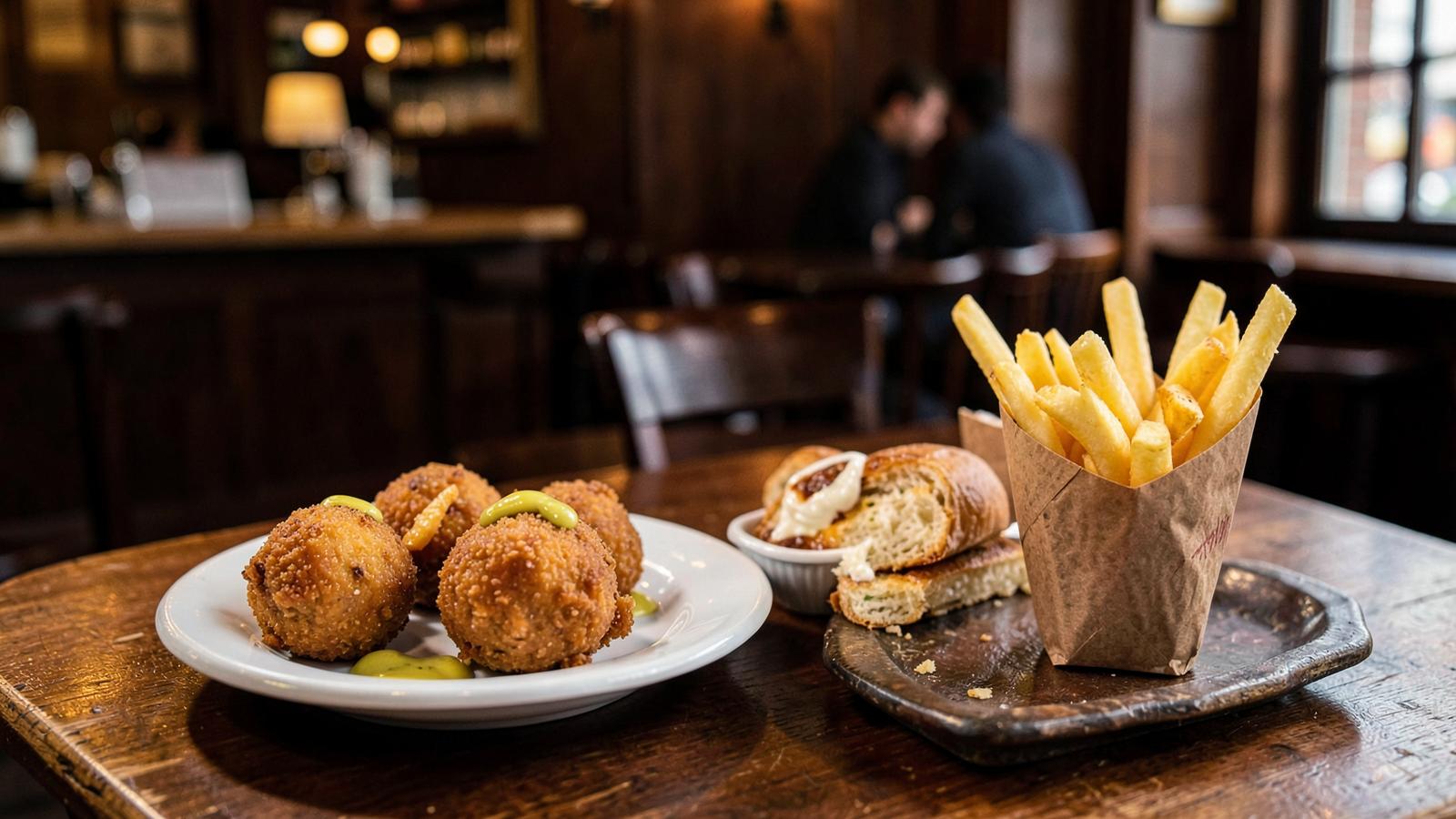
Best Dutch Snacks to Try in Amsterdam
A guide to Amsterdam's best snacks: bitterballen, stroopwafels, frites, FEBO walls, drop, tompouce and oliebollen, with prices and etiquette.
9 min read

Food & drink
Amsterdam Coffee Culture: What Visitors Should Know
How to navigate cafés, coffeeshops and brown bars in Amsterdam, what to order, laptop etiquette, tipping and the best areas for coffee.
10 min read
Neighbourhoods
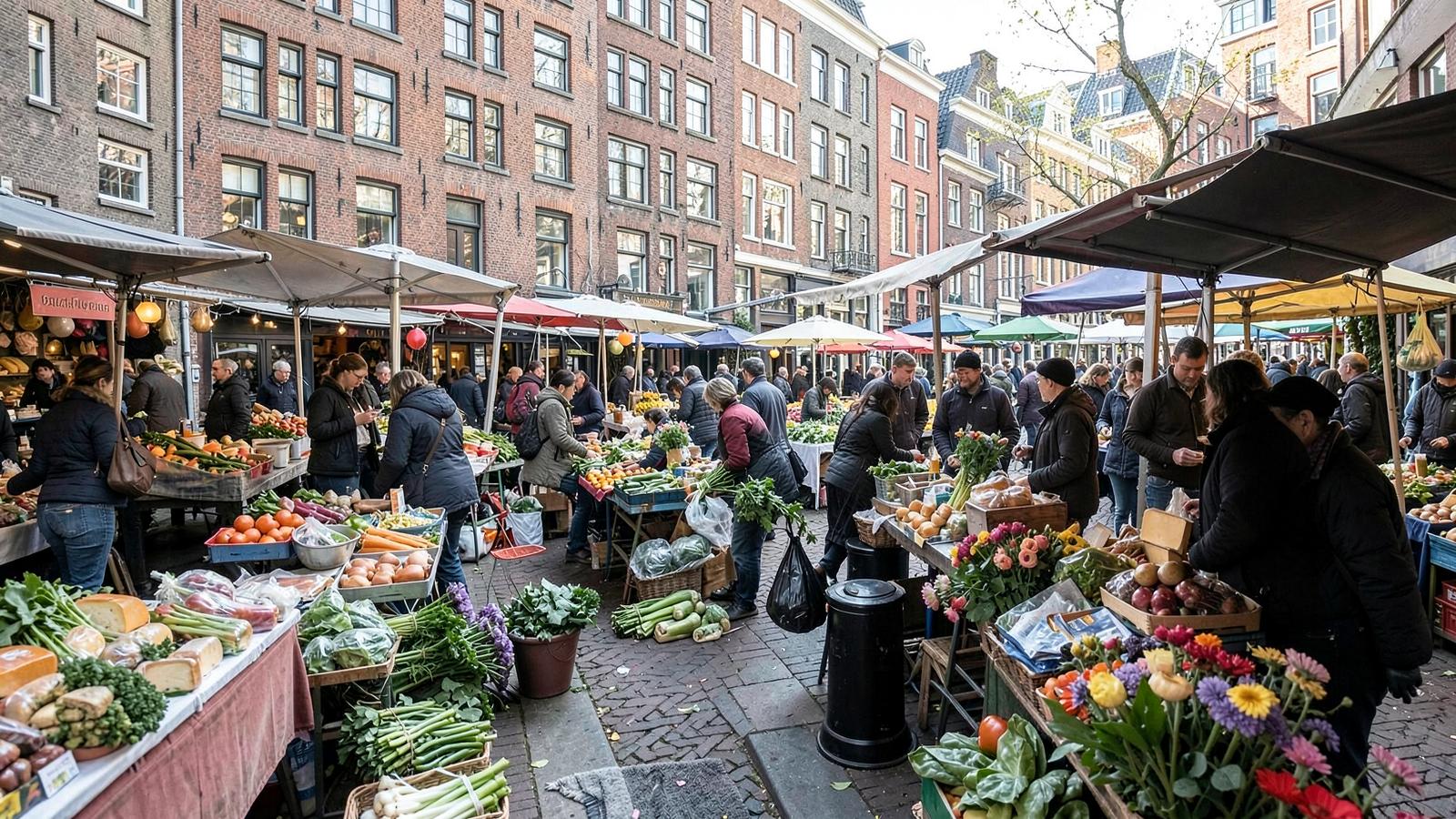
De Pijp: Amsterdam's Best Neighbourhood for Food and Markets
A guide to De Pijp: Albert Cuypmarkt, Sarphatipark, the food scene, the Heineken Experience and who it suits for a stay.
9 min read
Practical
Amsterdam on a Budget: How to Save Money
Tactical ways to cut costs in Amsterdam: free sights, museum pass maths, cheap eats, transport savings, and a sample daily budget.
10 min read
Opening hours and prices change. Always check official websites before you travel. Read our disclaimer.